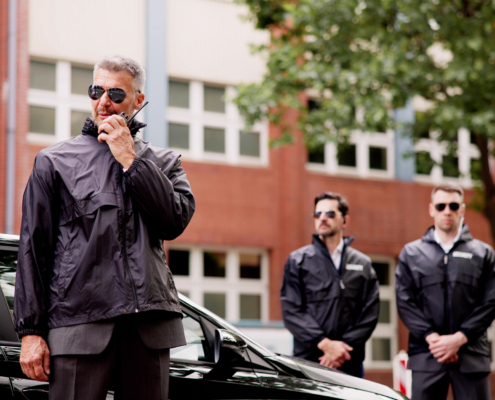
The difference between bodyguard and executive protection services comes down to five things: approach, planning, setting, training, and the armed option.
A bodyguard’s approach is reactive, responding to threats as they occur, while executive protection is proactive, working to identify and reduce risk before it ever appears. Planning reflects that same split. A bodyguard assignment usually involves minimal advance work, while executive protection includes route review, venue assessment, and threat planning ahead of time. The two also differ in setting: bodyguard work tends to cover single events or short-term coverage, while executive protection runs as an ongoing program across daily routines, travel, and events. Training focus shifts too, from physical intervention and close-quarters response toward risk assessment, logistics, and coordination with local authorities. And whether a team is armed is rarely a fixed rule either way. It gets built into the plan based on the venue and what a risk assessment finds, not decided in advance for every assignment.
None of this makes a bodyguard the wrong choice. A single high-visibility appearance with a clear, contained risk may only need a trained physical presence. The problem comes from assuming that arrangement covers ongoing travel, a public role, or a genuinely elevated threat, when it was never built to.